
Lunch is cooked in the building
A hot lunch and two snacks a day, included. Planned against Canada's Food Guide and rewritten around whatever allergies are in the room that month.
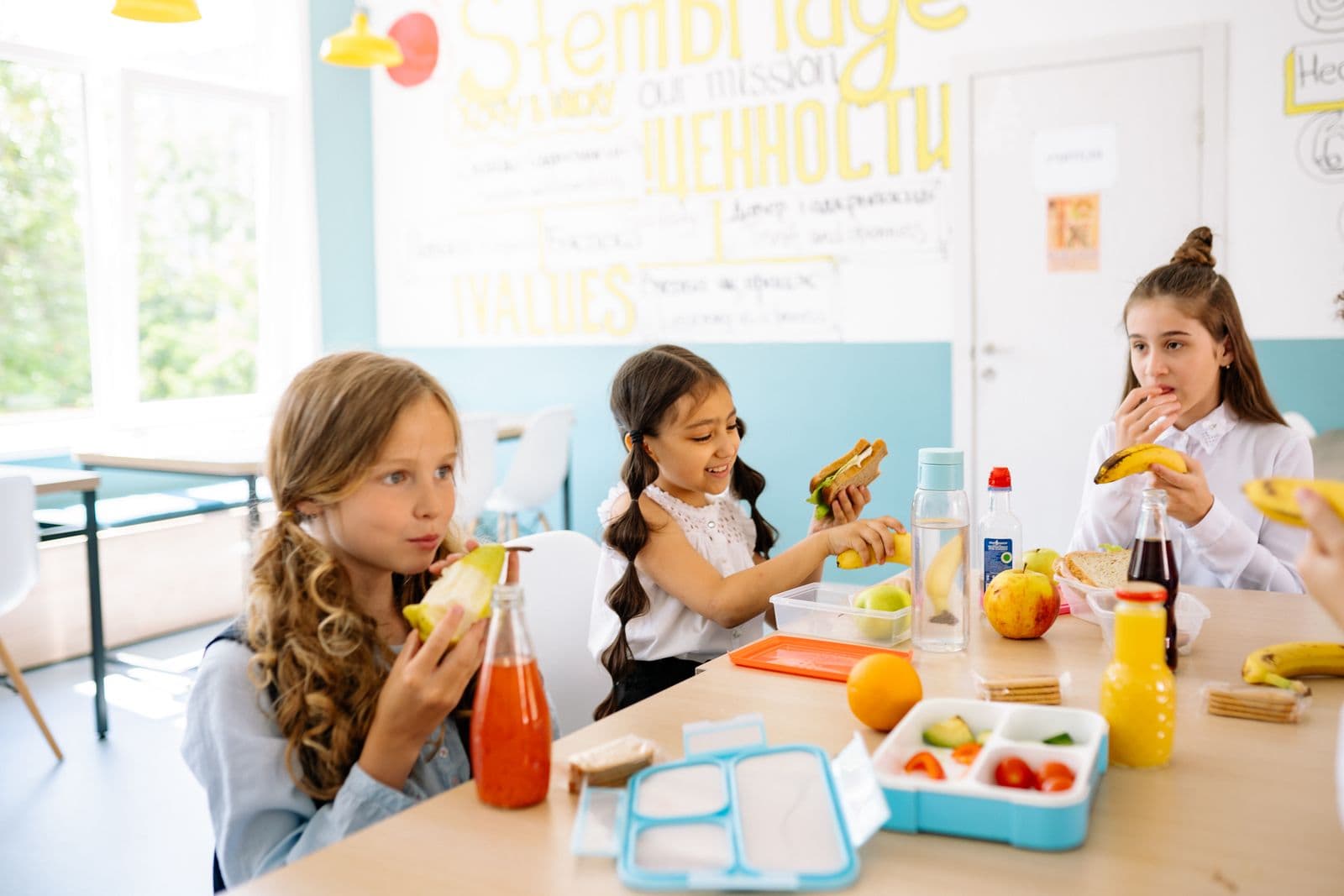
Infants up to 14 months bring food from home
Meals and snacks are included for every other age. For the youngest babies we ask parents to provide food, because that is the age where an allergy is most likely to be undiscovered and the safest plate is the one you packed yourself.
Cooked here, that morning
Not delivered in a warming tray. The kitchen is part of the building and the children can smell lunch being made, which does more for a fussy eater than any amount of encouragement.
Nobody is made to finish a plate
Children serve themselves where they can and take what they want. Being made to clear a plate teaches a child to ignore the signal that tells them they are full.
New food appears next to old food
A child may need to see something fifteen times before trying it. It goes on the table each time regardless, with no comment when it comes back untouched.
The menu is on the wall
By the door, for the week. You should know what your child ate before you ask them, because they will tell you they had nothing.
How allergies are handled
- Every allergy and intolerance is recorded at enrolment, with what happens and what to give.
- The kitchen and the floor staff work from the same list, updated the same day it changes.
- The menu is planned around the allergies in the room rather than a separate plate being improvised.
- Where medication is required, it is stored where staff can reach it in seconds and every educator on shift knows where.
Ask to see this week’s menu on your tour
It is on the wall by the door. Reading a real week tells you more than any description of a food philosophy, and it will tell you whether the kitchen is ambitious or reheating.
Book a tour